The Digital Promise, Tested: DigiSam's Assessment Reveals Why Government Schemes Still Fail the People They're Built For
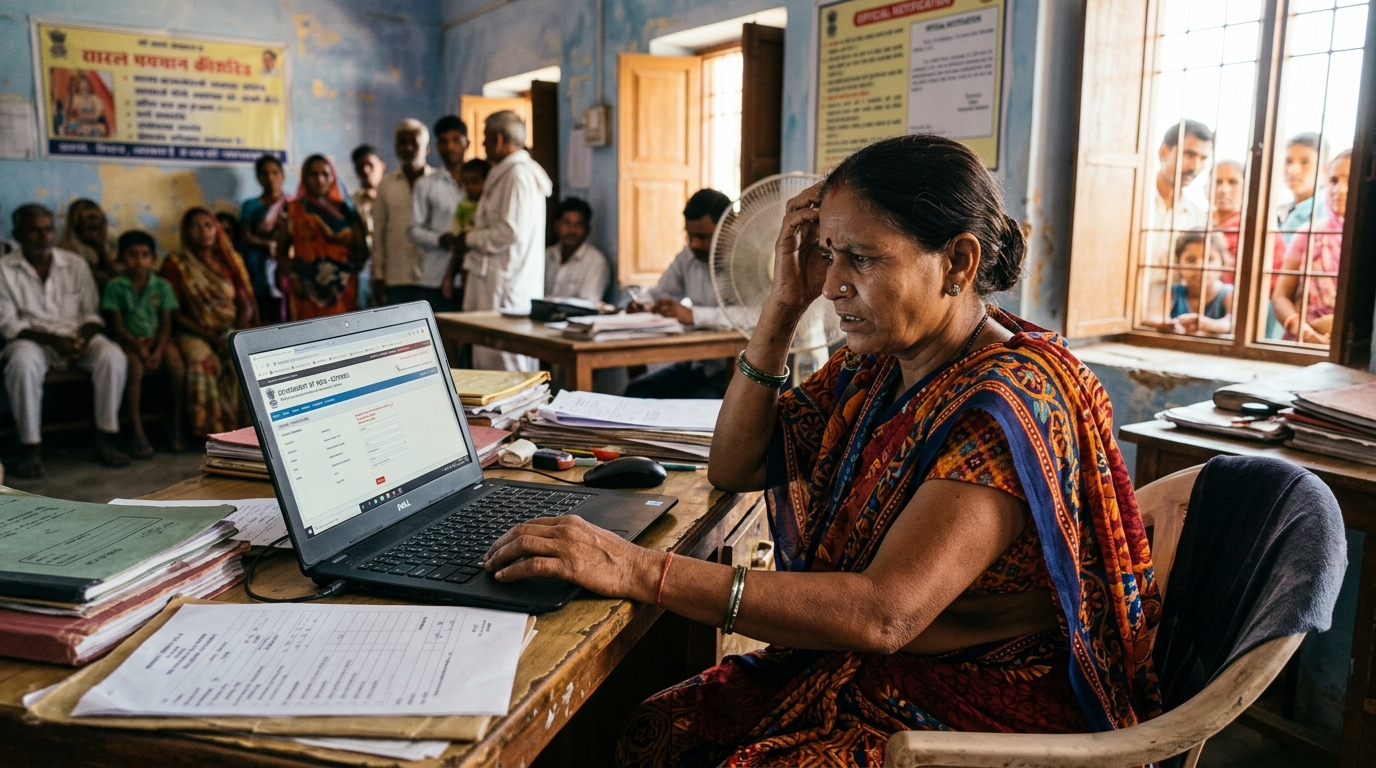
DigiSam Foundation reviewed the real-world accessibility of four government welfare schemes—from accidental insurance to old-age pensions to telemedicine—and found that while India's digital infrastructure has grown dramatically, crashing portals, missing tracking, and unresponsive grievance systems still stand between citizens and the support they're entitled to.
India has made extraordinary strides in digitizing public services. Government schemes that once required weeks of paperwork, long bus journeys, and repeated visits to district offices can now—in theory—be accessed from a smartphone or a Common Service Centre. But theory and reality are not the same thing. DigiSam Foundation set out to find where the gap lies, and what we discovered tells a story that millions of rural Indians already know by heart.
Why We Conducted This Assessment
Our Survey Sakhi research in Saidbhar village revealed that 87.2% of women have never accessed government service apps, despite the majority owning internet-enabled phones. The question was never whether these women lacked motivation. It was whether the systems themselves were ready for them.
To answer that honestly, we followed the complete application journey for four widely-used government schemes—walking the same path a rural citizen would walk, from searching for eligibility criteria to submitting applications, tracking progress, and filing complaints when things went wrong. The goal was straightforward: experience the system the way a citizen does, and document what actually happens.
The Four Schemes We Reviewed
We selected schemes that directly affect the communities we work with—covering insurance, child welfare, old-age pensions, and healthcare:
- Pradhan Mantri Suraksha Bima Yojana (PMSBY) — Accidental insurance coverage at ₹20 per year, applied through banks or online
- UP Mukhya Mantri Bal Seva Yojana — Financial support for eligible children, applied through an online portal
- UP Vridhavastha Pension Yojana — Old-age pension accessed via online portals or Common Service Centres
- eSanjeevani — Free telemedicine consultations through a mobile app and web portal
These are not obscure programmes. They are flagship welfare schemes meant to reach India's most vulnerable citizens—the elderly, children who have lost parents, families one accident away from financial ruin, and patients in villages with no nearby hospital.
What We Found: Digital On Paper, Broken In Practice
The headline finding is uncomfortable but important: digital availability does not mean digital accessibility. Across all four schemes, we encountered a pattern of operational barriers that would discourage even a digitally confident user—let alone a first-generation internet user in a rural village.
Portals That Crash When You Need Them Most
Multiple portals experienced downtime, slow loading, or outright technical errors during our assessment. For a woman in Saidbhar who has walked to the nearest Common Service Centre, paid for the service, and waited her turn—a crashed portal doesn't just mean "try again later." It means another day's wages lost, another bus fare, another cycle of frustration. The PMSBY portal required repeated visits due to downtime. The Bal Seva Yojana portal was unstable enough that applications could not be completed in a single session.
For urban users with stable broadband and flexible schedules, portal instability is an annoyance. For rural citizens, it is a barrier that can mean the difference between receiving benefits and giving up entirely.
Submitting an Application Into a Black Hole
Perhaps the most disheartening finding: after the considerable effort of actually completing and submitting an application, applicants often have no way to know what happened to it. Status tracking was unavailable or severely limited for the Bal Seva Yojana, the Vridhavastha Pension, and PMSBY.
Imagine filling out a complex form, uploading your Aadhaar card, bank passbook, photographs, and certificates—and then hearing nothing. No confirmation that your documents were received. No timeline for a decision. No way to check whether your application is being processed or has been silently rejected. This lack of transparency breeds exactly the kind of helplessness and distrust that digital governance was supposed to eliminate.
Grievance Systems That Don't Grieve With You
When applications stall or fail, citizens need a way to seek help. Our assessment found that while complaint mechanisms exist for some schemes, they were slow, opaque, or difficult to locate. The PMSBY grievance process had lengthy resolution timelines. The Bal Seva Yojana accepted complaints but responses were delayed. The Vridhavastha Pension's complaint resolution process was unclear. And eSanjeevani's grievance mechanism was not clearly visible at all.
A grievance system that doesn't resolve grievances is not a safety net—it is a performative gesture. For a rural citizen, filing a complaint that disappears into silence is worse than having no complaint system at all, because it wastes their time and erodes their faith in the process.
The Bright Spot: eSanjeevani Shows What's Possible
Not everything we found was discouraging. eSanjeevani, the telemedicine platform, stood out as a genuinely user-friendly service. Registration was straightforward, the consultation process was intuitive, and we encountered no major technical barriers. This is significant because it proves that government digital services can work well when designed with the user experience in mind.
The irony is striking: 98.4% of women in Saidbhar have never used telemedicine, despite 60% having internet-capable phones. The platform works—but awareness hasn't reached the people who need it most. eSanjeevani is a reminder that good technology and good outreach must go hand in hand.
The Real Cost of These Failures
Behind every crashed portal and missing tracking system, there is a human cost. Consider what our assessment documented across the schemes:
- Portal downtime forces citizens to make repeated visits, costing money and lost wages
- Technical errors interrupt applications mid-submission, requiring citizens to start over
- No status tracking leaves applicants in anxious uncertainty for weeks or months
- Unresponsive grievance systems deny citizens their right to accountability
- Mandatory physical verification adds travel costs and processing delays even when applications are submitted online
- Inconsistent interfaces across different scheme portals mean citizens must learn a new system every time
For a widow in Saidbhar applying for a pension, each of these barriers is not an inconvenience—it is a potential reason to abandon the process altogether and forego the support she is entitled to receive.
What Needs to Change
Our assessment points to six concrete improvements that would meaningfully transform the citizen experience:
- Stabilise portal infrastructure — Ensure portals can handle real-world traffic without crashing, particularly during high-demand periods
- Introduce real-time application tracking — Give every applicant a transparent view of where their application stands and what, if anything, is required from them
- Strengthen grievance redressal — Set and publish resolution timelines, and ensure complaints receive substantive responses
- Minimise mandatory physical visits — If an application is submitted digitally, verification should be digital wherever possible
- Standardise documentation requirements — Reduce the confusion caused by each scheme demanding different formats and documents
- Conduct regular usability testing with actual rural users — Design for the citizens these schemes serve, not for the officials who built them
Why This Matters for DigiSam's Mission
This assessment is not an exercise in criticism. It is an exercise in honesty—and it directly informs the work we do.
DigiSam Foundation is building an AI-powered agentic marketplace for last-mile delivery of government services, developed in partnership with academic researchers. The barriers documented in this assessment are precisely the problems that platform is being designed to solve. When a portal crashes, an AI agent can retry. When tracking is unavailable, the agent can monitor on the citizen's behalf. When forms require complex documentation, the agent can guide users through each step in their own language.
But technology alone is not the answer—and this assessment proves it. Even the best AI tool cannot fix a portal that is fundamentally unstable, or compensate for a grievance system that has no mechanism for accountability. Systemic improvements are needed alongside technological solutions.
From Assessment to Advocacy
We are publishing this assessment because the findings belong not just to DigiSam, but to every citizen who has ever felt defeated by a government website. The women in Saidbhar who told us they couldn't access schemes digitally were not describing a personal failing. They were describing a systemic one.
India's ambition to deliver welfare services digitally is the right ambition. The infrastructure is being built. The schemes exist. The intent is genuine. What remains is the hard, unglamorous work of making these systems actually work—reliably, transparently, and with the citizen at the centre.
DigiSam Foundation will continue conducting these assessments, publishing our findings openly, and using the evidence to build solutions that bridge the gap between digital promise and daily reality. Because a scheme that exists on paper but fails in practice is not a scheme at all—it is a broken promise. And the people we work with deserve better.
Want to Make a Difference?
Stories like this are possible because of supporters like you. Join us in bridging the digital divide.
Related Stories
More stories you might find interesting
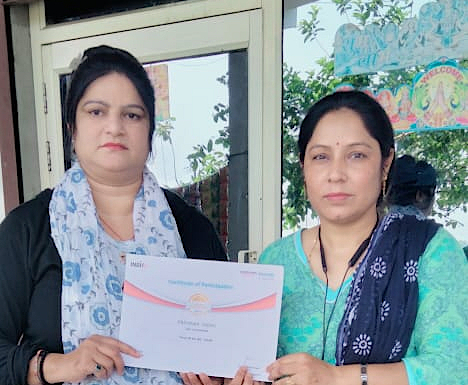
Village Women Complete Yuva AI for All Course, Earning Government Certificates in Artificial Intelligence
Women from Saidbhar village have successfully completed the Indian government's Yuva AI for All course—earning official certificates and, more importantly, a genuine understanding of how artificial intelligence is shaping the world around them.
Read More →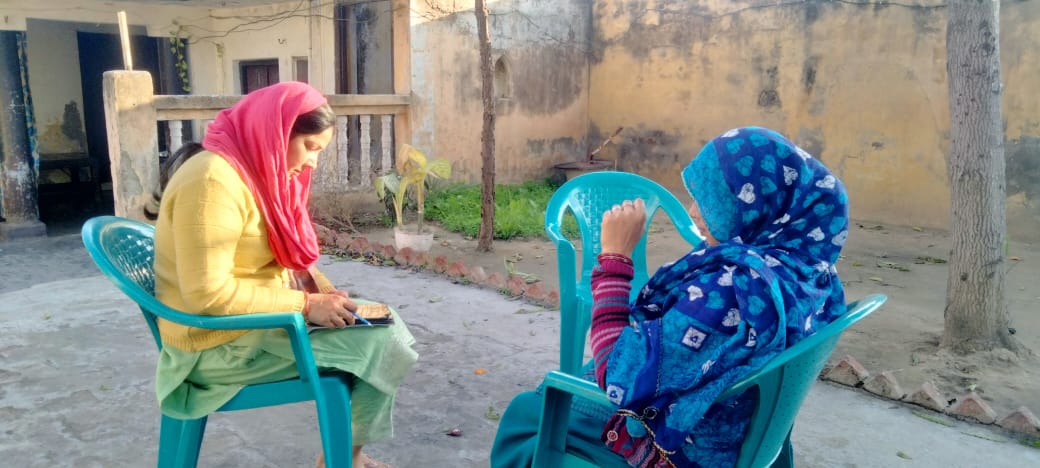
Survey Sakhi Programme Completes Full Village Coverage in Saidbhar
After months of patient, door-to-door conversations, Renu Rani has completed surveys across all 250 households in Saidbhar village. The findings reveal a striking paradox: infrastructure exists, but empowerment lags—and 250 women are ready to change that.
Read More →