From 2% to 35%: Awakening AI Interest in Rural Women
From 2% to 35%: Awakening AI Interest in Rural Women
Program: Survey Sakhi Project
Category: AI & Technology
Location: Saidbhar, Uttar Pradesh
Published: August 24, 2025
Potential Beneficiaries: 120
Summary
Only 2% of women in Saidbhar had heard of Artificial Intelligence before the Survey Sakhi project. Yet when asked about training for future AI-related jobs, 35% expressed interest—revealing that awareness, not aspiration, is the barrier to women's participation in emerging tech fields.
Impact at a Glance
The Challenge
The digital divide extends beyond basic literacy to emerging technologies. 98% of women in Saidbhar had never heard of Artificial Intelligence, reflecting the massive awareness gap between urban and rural tech exposure. With 40% having no or minimal formal education, concerns about AI readiness seem insurmountable.
Our Approach
Survey Sakhi's data collection process itself became an awareness intervention. By asking about AI and explaining potential applications, the survey revealed hidden aspiration—35% wanted training when presented with the opportunity. This matches the 35% who want digital earning skills and better smartphone use, showing a progressive cohort ready to leap forward.
Implementation
During the Survey Sakhi data collection in Saidbhar, a specific section on AI awareness was included in the questionnaire. Data collectors first asked if women had heard of Artificial Intelligence, recording near-zero awareness (2%). Then, they provided simple explanations of AI applications in daily life—voice assistants, recommendation systems, translation tools—and future job opportunities. After this brief awareness intervention, they asked about interest in AI training for future employment. This experimental approach transformed the survey from passive data collection into active awareness building, revealing latent aspirations hidden by lack of information.
Results & Impact
The results were striking: only 2% of women had heard of AI initially, but 35% expressed interest in AI training after a simple explanation. This 2% to 35% shift demonstrates that aspiration exists—it's just invisible without awareness. Significantly, the 35% interested in AI training exactly matches the 35% who want digital earning skills and the 35% who want better smartphone usage training, suggesting a consistent cohort of forward-thinking women ready for advanced technology training. Despite 40% having minimal formal education, interest in AI wasn't limited to educated women—it cut across education levels, indicating universal hunger for future-ready skills.
"I had never heard of AI before, but the Survey Sakhi explained it could help with many jobs in the future. If there is training available in our village, I would definitely join. I don't want to be left behind."
— Survey Respondent, Saidbhar Village, Saidbhar, Uttar Pradesh
Lessons Learned
Critical lessons emerged from this experiment: First, zero awareness doesn't mean zero interest—the 2% to 35% jump proves that exposure creates aspiration. Second, rural women aren't resistant to advanced technology; they're simply not exposed to it. Third, simple explanations matter—complex jargon creates barriers, but relatable examples (voice assistants, phone cameras) make AI tangible. Fourth, linking AI to livelihood opportunities (future jobs, earning potential) resonates strongly. Fifth, the 35% progressive cohort represents early adopters who could become AI champions in their community. Sixth, survey processes can be interventions—asking questions educates respondents and reveals hidden potential.
Looking Forward
Building on this discovery, DigiSam Foundation will develop an AI Awareness and Fundamentals Program for Saidbhar women. Phase 1 will focus on basic AI literacy: how AI works, everyday AI applications women already interact with (camera filters, voice assistants, translation), and future AI job opportunities. Phase 2 will introduce practical AI tools for livelihood—AI-powered language translation for e-commerce, AI photo editing for product marketing, and AI customer service chatbots. We'll target the 35% interested cohort in the first batch, using their success stories to inspire broader adoption. Goal: train 50 women in AI fundamentals within 12 months, preparing them for India's AI-driven economic future.
DigiSam Foundation
www.digisam.org
This case study is part of DigiSam Foundation's commitment to evidence-based digital literacy programs.
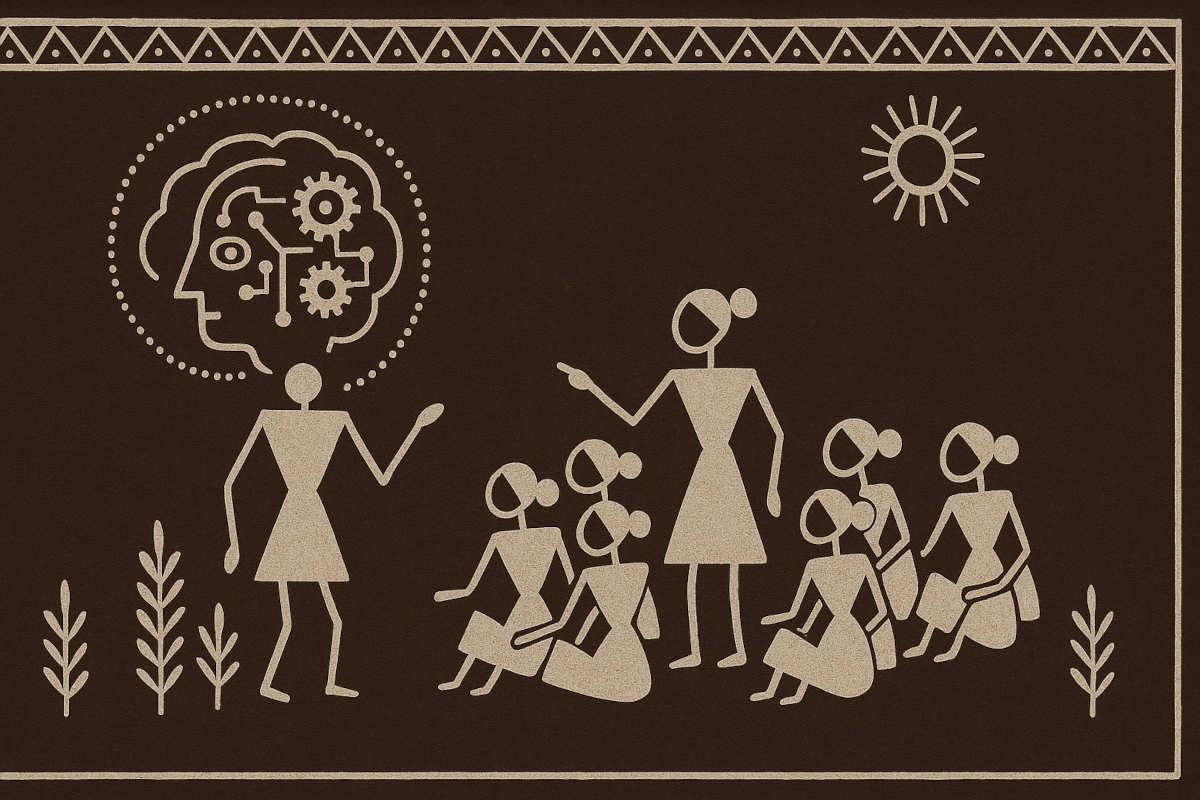
Impact at a Glance
Only 2% of women in Saidbhar had heard of Artificial Intelligence before the Survey Sakhi project. Yet when asked about training for future AI-related jobs, 35% expressed interest—revealing that awareness, not aspiration, is the barrier to women's participation in emerging tech fields.
The Challenge
The digital divide extends beyond basic literacy to emerging technologies. 98% of women in Saidbhar had never heard of Artificial Intelligence, reflecting the massive awareness gap between urban and rural tech exposure. With 40% having no or minimal formal education, concerns about AI readiness seem insurmountable.
Our Approach
Survey Sakhi's data collection process itself became an awareness intervention. By asking about AI and explaining potential applications, the survey revealed hidden aspiration—35% wanted training when presented with the opportunity. This matches the 35% who want digital earning skills and better smartphone use, showing a progressive cohort ready to leap forward.
Implementation
During the Survey Sakhi data collection in Saidbhar, a specific section on AI awareness was included in the questionnaire. Data collectors first asked if women had heard of Artificial Intelligence, recording near-zero awareness (2%). Then, they provided simple explanations of AI applications in daily life—voice assistants, recommendation systems, translation tools—and future job opportunities. After this brief awareness intervention, they asked about interest in AI training for future employment. This experimental approach transformed the survey from passive data collection into active awareness building, revealing latent aspirations hidden by lack of information.
Results & Impact
The results were striking: only 2% of women had heard of AI initially, but 35% expressed interest in AI training after a simple explanation. This 2% to 35% shift demonstrates that aspiration exists—it's just invisible without awareness. Significantly, the 35% interested in AI training exactly matches the 35% who want digital earning skills and the 35% who want better smartphone usage training, suggesting a consistent cohort of forward-thinking women ready for advanced technology training. Despite 40% having minimal formal education, interest in AI wasn't limited to educated women—it cut across education levels, indicating universal hunger for future-ready skills.
I had never heard of AI before, but the Survey Sakhi explained it could help with many jobs in the future. If there is training available in our village, I would definitely join. I don't want to be left behind.
Lessons Learned
Critical lessons emerged from this experiment: First, zero awareness doesn't mean zero interest—the 2% to 35% jump proves that exposure creates aspiration. Second, rural women aren't resistant to advanced technology; they're simply not exposed to it. Third, simple explanations matter—complex jargon creates barriers, but relatable examples (voice assistants, phone cameras) make AI tangible. Fourth, linking AI to livelihood opportunities (future jobs, earning potential) resonates strongly. Fifth, the 35% progressive cohort represents early adopters who could become AI champions in their community. Sixth, survey processes can be interventions—asking questions educates respondents and reveals hidden potential.
Looking Forward
Building on this discovery, DigiSam Foundation will develop an AI Awareness and Fundamentals Program for Saidbhar women. Phase 1 will focus on basic AI literacy: how AI works, everyday AI applications women already interact with (camera filters, voice assistants, translation), and future AI job opportunities. Phase 2 will introduce practical AI tools for livelihood—AI-powered language translation for e-commerce, AI photo editing for product marketing, and AI customer service chatbots. We'll target the 35% interested cohort in the first batch, using their success stories to inspire broader adoption. Goal: train 50 women in AI fundamentals within 12 months, preparing them for India's AI-driven economic future.
Be Part of Our Research Impact
Our case studies reveal critical gaps in digital literacy. Support our evidence-based programs to empower rural communities.
Related Case Studies
More research findings from our initiatives

The 40% Knowledge Gap: Digital Payments in Saidbhar
Survey data from Saidbhar village reveals that 75% of women have never used digital payments—not due to lack of access, but lack of knowledge. 40% of non-users cite 'don't know how to use apps' as the primary barrier, highlighting a critical training opportunity.
Read Case Study →
95% Untapped Potential: Telemedicine in Rural Saidbhar
Survey findings reveal a paradox: 100% of women in Saidbhar are aware of government health insurance schemes, yet 95% have never used telemedicine despite 95% experiencing recurring fever, diarrhea, and respiratory issues. Digital health could transform rural healthcare access.
Read Case Study →
90% Know, 85% Can't Access: Digital Government Services Gap
A striking paradox emerged from Saidbhar: 90% of women know about government schemes for women (widow pension, Ujjwala gas, Jan Dhan accounts), but 85% don't know how to access these schemes digitally. The information exists, but the bridge to action is missing.
Read Case Study →