The 40% Knowledge Gap: Digital Payments in Saidbhar
The 40% Knowledge Gap: Digital Payments in Saidbhar
Program: Survey Sakhi Project
Category: Financial Inclusion
Location: Saidbhar, Uttar Pradesh
Published: July 22, 2025
Potential Beneficiaries: 160
Summary
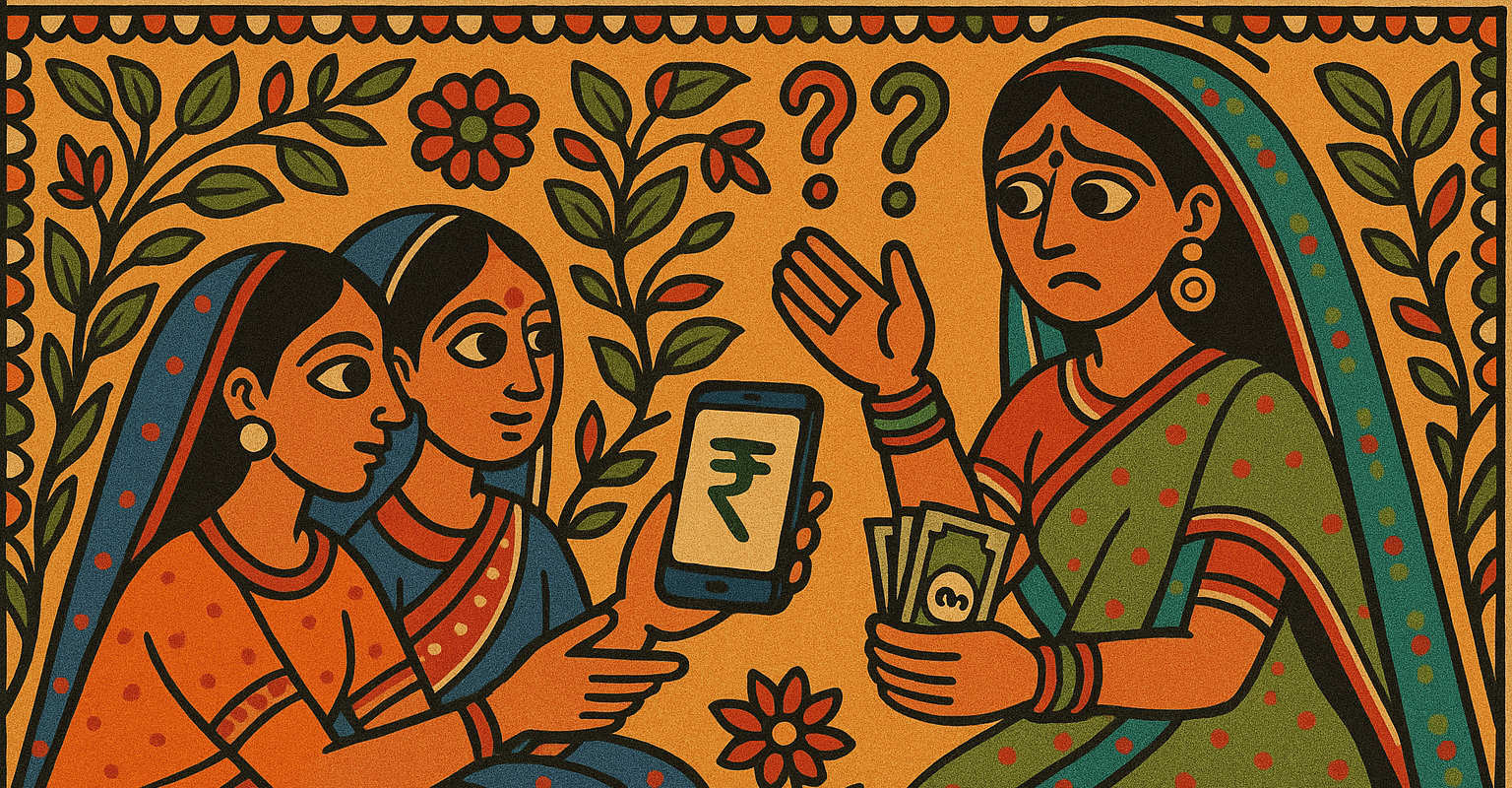
Survey data from Saidbhar village reveals that 75% of women have never used digital payments—not due to lack of access, but lack of knowledge. 40% of non-users cite 'don't know how to use apps' as the primary barrier, highlighting a critical training opportunity.
Impact at a Glance
The Challenge
Despite 70% of women having bank accounts and 80% of families having internet access, only 25% use digital payments. The barrier isn't infrastructure—it's confidence and knowledge. 40% cite not knowing how to use apps, 20% fear making mistakes, and 25% prefer cash due to unfamiliarity with digital systems.
Our Approach
Survey Sakhi identified this knowledge gap through door-to-door surveys of women. The data revealed that training—not technology access—is the solution. With 90% willing to participate in local training and 98% preferring group learning, community-based digital literacy programs can unlock financial inclusion.
Implementation
Survey Sakhi data collectors conducted comprehensive financial inclusion surveys across 92 households in Saidbhar village. The survey included detailed questions about bank account ownership, digital payment usage, barriers to adoption, and training preferences. Data was collected through one-on-one conversations in Hindi, ensuring women felt comfortable sharing their fears and concerns about digital financial tools. The findings were compiled into a structured dataset revealing the 40% knowledge gap as the primary barrier.
Results & Impact
The survey quantified the digital payment gap: 75% of women have never used UPI despite 70% having bank accounts and 45% owning smartphones. Critically, 40% identified 'not knowing how to use apps' as the main barrier, not lack of access or trust issues. This finding shifts the intervention strategy from infrastructure development to skills training. The data also revealed high training receptivity: 90% would join local programs, and 98% prefer group learning, providing a clear implementation roadmap for financial inclusion initiatives.
"I have a smartphone and a bank account, but I never used UPI because I was afraid I would make a mistake and lose money. If someone teaches me properly, I would definitely try it."
— Survey Respondent, Saidbhar Village, Saidbhar, Uttar Pradesh
Lessons Learned
The research revealed that digital financial inclusion barriers are primarily educational, not technological. Fear of mistakes (20%) indicates a need for safe practice environments in training. The 25% who prefer cash aren't technophobic—they simply lack exposure to digital payment benefits. Women's 45% smartphone ownership rate is rising, creating a window of opportunity for intervention. The 98% preference for group learning suggests that peer support reduces anxiety about technology adoption. Finally, the 40% knowledge gap is addressable through targeted, community-based training programs.
Looking Forward
Based on these findings, DigiSam Foundation will launch a pilot Digital Payments Training Program targeting 25-30 women in Saidbhar. The curriculum will focus on UPI apps (Google Pay, PhonePe, Paytm), emphasizing hands-on practice with small transactions to build confidence. Training will be conducted in group settings at the village community center, leveraging the 98% group learning preference. We'll partner with local banks to provide supervised practice sessions. Success metrics include: 70% of participants completing at least 5 digital transactions within 3 months, and reduction in fear of mistakes from 20% to under 5%.
DigiSam Foundation
www.digisam.org
This case study is part of DigiSam Foundation's commitment to evidence-based digital literacy programs.
Impact at a Glance
Survey data from Saidbhar village reveals that 75% of women have never used digital payments—not due to lack of access, but lack of knowledge. 40% of non-users cite 'don't know how to use apps' as the primary barrier, highlighting a critical training opportunity.
The Challenge
Despite 70% of women having bank accounts and 80% of families having internet access, only 25% use digital payments. The barrier isn't infrastructure—it's confidence and knowledge. 40% cite not knowing how to use apps, 20% fear making mistakes, and 25% prefer cash due to unfamiliarity with digital systems.
Our Approach
Survey Sakhi identified this knowledge gap through door-to-door surveys of women. The data revealed that training—not technology access—is the solution. With 90% willing to participate in local training and 98% preferring group learning, community-based digital literacy programs can unlock financial inclusion.
Implementation
Survey Sakhi data collectors conducted comprehensive financial inclusion surveys across 92 households in Saidbhar village. The survey included detailed questions about bank account ownership, digital payment usage, barriers to adoption, and training preferences. Data was collected through one-on-one conversations in Hindi, ensuring women felt comfortable sharing their fears and concerns about digital financial tools. The findings were compiled into a structured dataset revealing the 40% knowledge gap as the primary barrier.
Results & Impact
The survey quantified the digital payment gap: 75% of women have never used UPI despite 70% having bank accounts and 45% owning smartphones. Critically, 40% identified 'not knowing how to use apps' as the main barrier, not lack of access or trust issues. This finding shifts the intervention strategy from infrastructure development to skills training. The data also revealed high training receptivity: 90% would join local programs, and 98% prefer group learning, providing a clear implementation roadmap for financial inclusion initiatives.
I have a smartphone and a bank account, but I never used UPI because I was afraid I would make a mistake and lose money. If someone teaches me properly, I would definitely try it.
Lessons Learned
The research revealed that digital financial inclusion barriers are primarily educational, not technological. Fear of mistakes (20%) indicates a need for safe practice environments in training. The 25% who prefer cash aren't technophobic—they simply lack exposure to digital payment benefits. Women's 45% smartphone ownership rate is rising, creating a window of opportunity for intervention. The 98% preference for group learning suggests that peer support reduces anxiety about technology adoption. Finally, the 40% knowledge gap is addressable through targeted, community-based training programs.
Looking Forward
Based on these findings, DigiSam Foundation will launch a pilot Digital Payments Training Program targeting 25-30 women in Saidbhar. The curriculum will focus on UPI apps (Google Pay, PhonePe, Paytm), emphasizing hands-on practice with small transactions to build confidence. Training will be conducted in group settings at the village community center, leveraging the 98% group learning preference. We'll partner with local banks to provide supervised practice sessions. Success metrics include: 70% of participants completing at least 5 digital transactions within 3 months, and reduction in fear of mistakes from 20% to under 5%.
Be Part of Our Research Impact
Our case studies reveal critical gaps in digital literacy. Support our evidence-based programs to empower rural communities.
Related Case Studies
More research findings from our initiatives
95% Untapped Potential: Telemedicine in Rural Saidbhar
Survey findings reveal a paradox: 100% of women in Saidbhar are aware of government health insurance schemes, yet 95% have never used telemedicine despite 95% experiencing recurring fever, diarrhea, and respiratory issues. Digital health could transform rural healthcare access.
Read Case Study →
From 2% to 35%: Awakening AI Interest in Rural Women
Only 2% of women in Saidbhar had heard of Artificial Intelligence before the Survey Sakhi project. Yet when asked about training for future AI-related jobs, 35% expressed interest—revealing that awareness, not aspiration, is the barrier to women's participation in emerging tech fields.
Read Case Study →
90% Know, 85% Can't Access: Digital Government Services Gap
A striking paradox emerged from Saidbhar: 90% of women know about government schemes for women (widow pension, Ujjwala gas, Jan Dhan accounts), but 85% don't know how to access these schemes digitally. The information exists, but the bridge to action is missing.
Read Case Study →