95% Untapped Potential: Telemedicine in Rural Saidbhar
95% Untapped Potential: Telemedicine in Rural Saidbhar
Program: Survey Sakhi Project
Category: Digital Literacy
Location: Saidbhar, Uttar Pradesh
Published: August 23, 2025
Potential Beneficiaries: 400
Summary
Survey findings reveal a paradox: 100% of women in Saidbhar are aware of government health insurance schemes, yet 95% have never used telemedicine despite 95% experiencing recurring fever, diarrhea, and respiratory issues. Digital health could transform rural healthcare access.
Impact at a Glance
The Challenge
Women in Saidbhar face recurring health issues—95% experience fever, diarrhea, and respiratory problems—yet must travel to distant private hospitals (60%) or government facilities (30%) for every consultation. Despite 100% awareness of Ayushman Bharat health insurance and 80% of families having internet, only 5% have ever tried telemedicine.
Our Approach
The Survey Sakhi data collection revealed massive untapped potential for digital health interventions. ASHA workers successfully reach 99% of women for vaccination information, proving the community health worker model works. Extending this to telemedicine training could provide immediate healthcare access, especially for common ailments.
Implementation
Survey Sakhi conducted health access surveys across women in Saidbhar, documenting common illnesses, healthcare facility usage, telemedicine awareness, and digital health readiness. Questions covered distance to hospitals, frequency of common ailments, health insurance knowledge, and interest in learning digital health tools. The survey also mapped the successful ASHA worker model for vaccination information delivery (99% reach), identifying it as a potential channel for telemedicine training. Data collection took place over 5 weeks, with follow-up questions to understand barriers to digital health adoption.
Results & Impact
The findings revealed a stark digital health paradox: 100% Ayushman Bharat awareness versus 95% zero telemedicine usage. With 95% of women experiencing recurring fever, diarrhea, and respiratory issues, and 60% traveling to distant private hospitals for every consultation, the cost—in time, money, and delayed care—is enormous. Yet the infrastructure exists: 80% have internet, and 45% of women own smartphones. The survey quantified the opportunity: if even 30% of the total women adopted telemedicine for common ailments, it could save approximately 250+ hospital trips annually in this one village alone.
"When my child gets fever at night, I have to wait until morning to travel several kilometers to the hospital. If I could talk to a doctor on the phone, it would save so much time and worry."
— Survey Respondent, Saidbhar Village, Saidbhar, Uttar Pradesh
Lessons Learned
Key insights emerged: First, awareness of health schemes (100%) doesn't translate to digital health adoption (5%), indicating a massive training gap. Second, the ASHA worker model's success (99% reach for vaccination info) provides a proven community health infrastructure that could be leveraged for telemedicine training. Third, common ailments (fever, diarrhea, respiratory issues affecting 95%) are exactly the conditions telemedicine serves best. Fourth, women's preference for private hospitals (60%) despite government health insurance suggests quality concerns that telemedicine could partially address through immediate expert consultation. Fifth, night-time emergencies particularly affect mothers, making 24/7 telemedicine especially valuable.
Looking Forward
DigiSam Foundation plans to partner with ASHA workers to pilot a Telemedicine Training Program in Saidbhar. The initiative will train 20-25 women in using government telemedicine platforms (e-Sanjeevani, Aarogya Setu) and private options. Training will cover: identifying conditions suitable for telemedicine vs. in-person care, using video consultation features, sharing symptoms effectively, and following up on prescriptions digitally. We'll collaborate with local primary health centers to integrate telemedicine into the existing health delivery system. Target: reduce non-emergency hospital trips by 40% within 6 months, measured through follow-up surveys tracking healthcare access patterns.
DigiSam Foundation
www.digisam.org
This case study is part of DigiSam Foundation's commitment to evidence-based digital literacy programs.
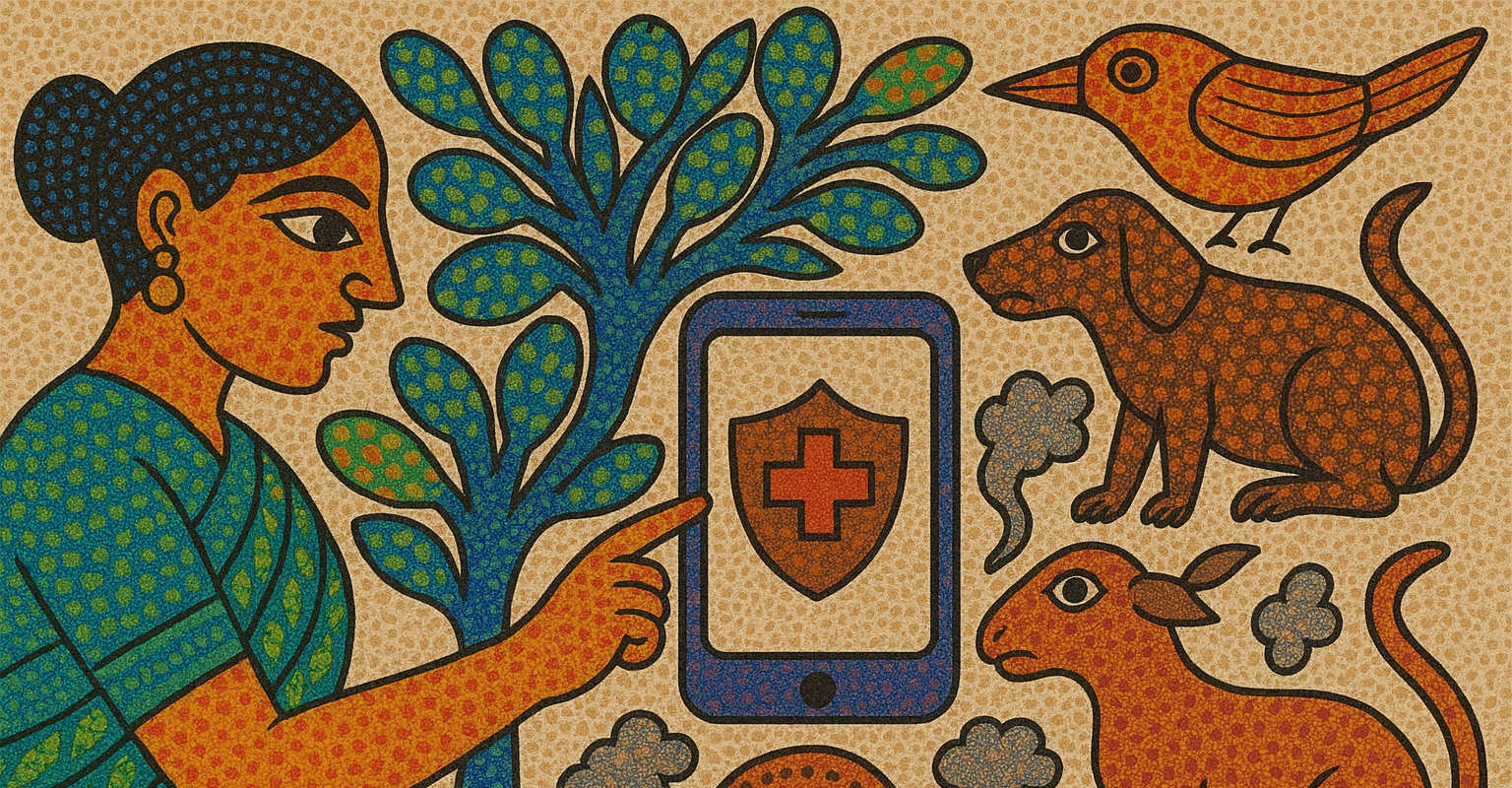
Impact at a Glance
Survey findings reveal a paradox: 100% of women in Saidbhar are aware of government health insurance schemes, yet 95% have never used telemedicine despite 95% experiencing recurring fever, diarrhea, and respiratory issues. Digital health could transform rural healthcare access.
The Challenge
Women in Saidbhar face recurring health issues—95% experience fever, diarrhea, and respiratory problems—yet must travel to distant private hospitals (60%) or government facilities (30%) for every consultation. Despite 100% awareness of Ayushman Bharat health insurance and 80% of families having internet, only 5% have ever tried telemedicine.
Our Approach
The Survey Sakhi data collection revealed massive untapped potential for digital health interventions. ASHA workers successfully reach 99% of women for vaccination information, proving the community health worker model works. Extending this to telemedicine training could provide immediate healthcare access, especially for common ailments.
Implementation
Survey Sakhi conducted health access surveys across women in Saidbhar, documenting common illnesses, healthcare facility usage, telemedicine awareness, and digital health readiness. Questions covered distance to hospitals, frequency of common ailments, health insurance knowledge, and interest in learning digital health tools. The survey also mapped the successful ASHA worker model for vaccination information delivery (99% reach), identifying it as a potential channel for telemedicine training. Data collection took place over 5 weeks, with follow-up questions to understand barriers to digital health adoption.
Results & Impact
The findings revealed a stark digital health paradox: 100% Ayushman Bharat awareness versus 95% zero telemedicine usage. With 95% of women experiencing recurring fever, diarrhea, and respiratory issues, and 60% traveling to distant private hospitals for every consultation, the cost—in time, money, and delayed care—is enormous. Yet the infrastructure exists: 80% have internet, and 45% of women own smartphones. The survey quantified the opportunity: if even 30% of the total women adopted telemedicine for common ailments, it could save approximately 250+ hospital trips annually in this one village alone.
When my child gets fever at night, I have to wait until morning to travel several kilometers to the hospital. If I could talk to a doctor on the phone, it would save so much time and worry.
Lessons Learned
Key insights emerged: First, awareness of health schemes (100%) doesn't translate to digital health adoption (5%), indicating a massive training gap. Second, the ASHA worker model's success (99% reach for vaccination info) provides a proven community health infrastructure that could be leveraged for telemedicine training. Third, common ailments (fever, diarrhea, respiratory issues affecting 95%) are exactly the conditions telemedicine serves best. Fourth, women's preference for private hospitals (60%) despite government health insurance suggests quality concerns that telemedicine could partially address through immediate expert consultation. Fifth, night-time emergencies particularly affect mothers, making 24/7 telemedicine especially valuable.
Looking Forward
DigiSam Foundation plans to partner with ASHA workers to pilot a Telemedicine Training Program in Saidbhar. The initiative will train 20-25 women in using government telemedicine platforms (e-Sanjeevani, Aarogya Setu) and private options. Training will cover: identifying conditions suitable for telemedicine vs. in-person care, using video consultation features, sharing symptoms effectively, and following up on prescriptions digitally. We'll collaborate with local primary health centers to integrate telemedicine into the existing health delivery system. Target: reduce non-emergency hospital trips by 40% within 6 months, measured through follow-up surveys tracking healthcare access patterns.
Be Part of Our Research Impact
Our case studies reveal critical gaps in digital literacy. Support our evidence-based programs to empower rural communities.
Related Case Studies
More research findings from our initiatives
The 40% Knowledge Gap: Digital Payments in Saidbhar
Survey data from Saidbhar village reveals that 75% of women have never used digital payments—not due to lack of access, but lack of knowledge. 40% of non-users cite 'don't know how to use apps' as the primary barrier, highlighting a critical training opportunity.
Read Case Study →
From 2% to 35%: Awakening AI Interest in Rural Women
Only 2% of women in Saidbhar had heard of Artificial Intelligence before the Survey Sakhi project. Yet when asked about training for future AI-related jobs, 35% expressed interest—revealing that awareness, not aspiration, is the barrier to women's participation in emerging tech fields.
Read Case Study →
90% Know, 85% Can't Access: Digital Government Services Gap
A striking paradox emerged from Saidbhar: 90% of women know about government schemes for women (widow pension, Ujjwala gas, Jan Dhan accounts), but 85% don't know how to access these schemes digitally. The information exists, but the bridge to action is missing.
Read Case Study →